Most condo buyers spend their due diligence period focused on the unit – the kitchen, the finishes, the view. The reserve fund study sits in a stack of HOA documents that gets skimmed at best and ignored at worst. That’s a mistake with a price tag that can run into the tens of thousands.
The reserve fund study is the single most predictive document in a condo purchase. It tells you whether the association has the money to maintain the building, what major expenses are coming, and how likely you are to receive a special assessment notice in the next three to five years. Buyers who understand how to read it buy with confidence. Buyers who skip it sometimes discover – after closing – that they’ve inherited a financial problem that was hiding in plain sight.
This guide covers what a condo reserve fund is, how to read the study, the specific red flags that should trigger concern, and what happens when an association is underfunded. If you’re already in a condo with a troubled reserve, there’s a section for that too. And if any of what you find raises legal questions, our condominium law practice is available for a pre-close review.
What Is a Condo Reserve Fund and What Should It Cover?
A reserve fund is the association’s long-term savings account for major repairs and replacements. Every month, a portion of your HOA dues goes into this fund to accumulate over time. When the roof needs replacing, when the elevators need a full overhaul, when the parking structure requires structural repairs – the reserve fund is what pays for it.
Without adequate reserves, associations face two options when a major expense arrives: borrow money through an HOA loan, or levy a special assessment against every unit owner. Both options cost you money. Neither is painless. A well-funded reserve avoids both.
A properly maintained reserve fund should cover all major common components with a defined useful life. In a typical Texas condo community, that includes:
- Roofing systems: Replacement cycles typically run 20-30 years depending on material and climate exposure
- Elevators: Full cab renovations and mechanical overhauls are expensive and non-negotiable in mid-rise and high-rise buildings
- HVAC systems serving common areas: Lobby, hallway, and amenity space climate systems have finite lifespans
- Parking structures: Concrete deterioration, waterproofing, and drainage systems require periodic major investment
- Swimming pools and amenity facilities: Resurfacing, equipment replacement, and code compliance updates
- Exterior painting and building envelope: Stucco, siding, and waterproofing systems protecting the structure
- Plumbing infrastructure: Main stack relining or replacement in older buildings
- Common area furnishings and finishes: Lobbies, hallways, and shared spaces require periodic renovation
The reserve study projects the cost and timing of each of these replacements over a 20-30 year horizon and calculates how much the association needs to be saving each month to be ready when the bill arrives. When that math works out and the association follows the plan, reserves stay healthy. When it doesn’t – or when boards defer contributions to keep dues artificially low – the fund falls behind, and owners eventually pay the difference.
How to Read a Reserve Fund Study
A reserve fund study is a professional report, typically prepared by a reserve specialist or engineer, that inventories the association’s major components, assesses their current condition and remaining useful life, and projects a funding schedule. Understanding the key numbers is the first step in evaluating the financial health of any condo you’re considering.
The Funded Percentage – The Number That Matters Most
The funded percentage compares the association’s current reserve balance to what the balance should be if the fund were on a perfect accumulation track relative to the age and condition of all major components. It’s expressed as a percentage, and here’s what the numbers mean:
- 70% or above – Healthy: The association is financially prepared for anticipated expenses. Low risk of unexpected special assessments from normal capital needs.
- 50-69% – Caution: The fund is below ideal but not critically underfunded. Review the reserve study carefully to understand which components are approaching replacement and whether the funding gap creates near-term risk.
- 30-49% – Warning: Special assessment risk is meaningfully elevated. At this level, a single major unexpected expense can trigger an assessment. Negotiate accordingly – a price adjustment or seller-funded escrow may be appropriate.
- Below 30% – Serious Problem: The association is significantly underfunded. The probability of a large special assessment within the next several years is high. This situation warrants attorney review before you proceed.
The Funding Plan
Beyond the current funded percentage, look at the funding plan – the association’s roadmap for improving reserve health going forward. A responsible board facing an underfunded reserve will have a formal plan to increase monthly contributions over time. If the funded percentage is low but the plan shows a credible path to recovery, that’s meaningfully different from an underfunded association with no corrective plan in place.
Component-Level Detail
The reserve study lists each major component individually with its estimated replacement cost and remaining useful life. Read this section carefully. An association at 60% funded overall might have its roof – a $400,000 replacement – three years from end of life with insufficient funds allocated. That’s a very different risk profile than a 60% funded association whose nearest major expense is ten years away.
Study Date and Currency
Ask when the reserve study was last updated. Industry best practice is to update the study every three to five years, with annual reviews in between. A study that’s seven years old is telling you about costs and timelines that no longer reflect current reality. Construction costs have increased significantly in recent years – a study prepared in 2018 may dramatically underestimate what the same work costs today.
Condo Reserve Fund Red Flags: What Should Trigger Concern
Not every underfunded reserve is a deal-killer. Context matters – the severity of the shortfall, the components approaching end of life, the board’s plan to address the gap, and how the risk is priced into your offer all factor into a reasonable assessment. But the following situations should stop you in your tracks and prompt either serious negotiation or a conversation with a real estate attorney before you proceed.
Funded Percentage Below 30% With No Recovery Plan
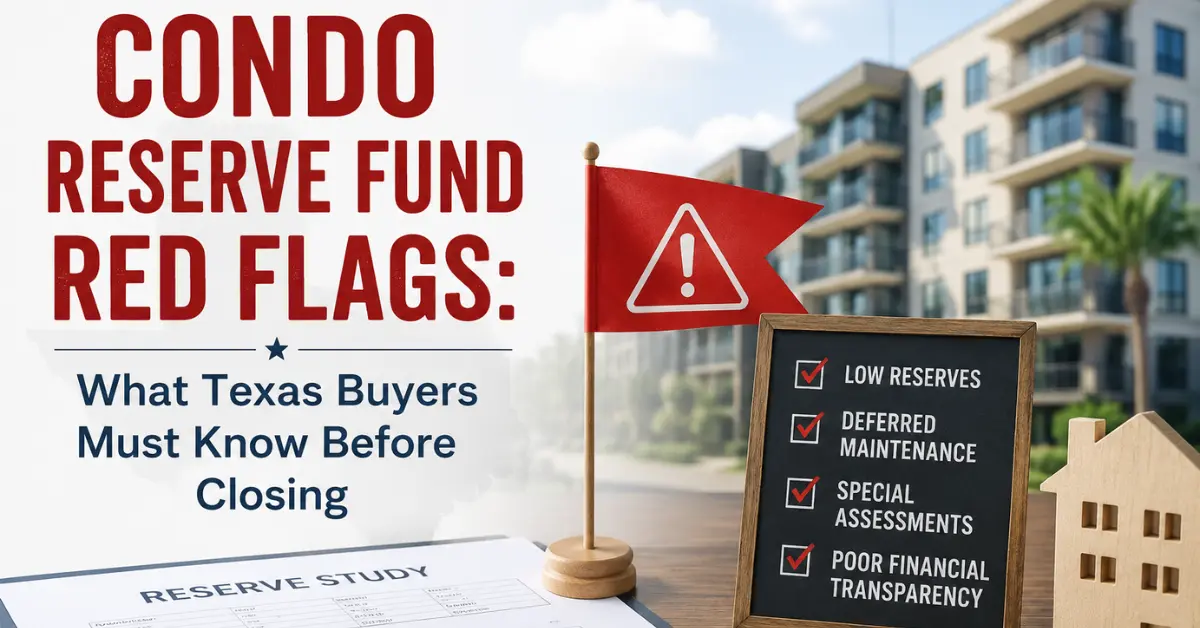
A reserve funded below 30% is a structural financial problem. Without a formal, board-approved funding plan to increase contributions meaningfully over the next several years, the association has no realistic path to building adequate reserves before major components reach end of life. The money to pay for those replacements will have to come from somewhere – and that somewhere is the unit owners.
No Reserve Study, or a Study Older Than Five Years
An association that has never commissioned a reserve study, or hasn’t updated one in more than five years, is operating financially blind. Without a current study, the board cannot accurately project future capital needs, set appropriate contribution levels, or make informed decisions about assessments. This isn’t just a financial red flag – it suggests a governance problem. Boards that don’t track their financial obligations tend to defer problems until they become crises.
Recent or Pending Special Assessments
Ask specifically whether any special assessment has been voted on, approved, or even discussed at recent board meetings. A seller is required under Texas law to disclose known pending assessments in the resale certificate – but “discussed informally” doesn’t always make it into official disclosure. Review the last 24 months of meeting minutes yourself. If you see repeated references to a failing roof, aging elevators, or deteriorating parking structures alongside discussions about the cost of repairs, that’s a preview of what’s coming.
Borrowing From Reserves for Operating Expenses
Some associations, when operating budgets run short, transfer funds from the reserve account to cover day-to-day expenses. This is sometimes referred to as “borrowing” from reserves, and it’s a serious warning sign. When reserve funds are depleted to cover operating shortfalls, the association is spending its future repair budget on current expenses – and the depletion compounds over time. Look for this pattern in the financial statements: compare reserve fund balances year over year and watch for unexplained decreases that don’t correspond to known capital projects.
Deferred Maintenance Visible in the Property
Physical signs of deferred maintenance – peeling paint on the building exterior, visibly deteriorating concrete in parking areas, aging elevator interiors, pool equipment past its service life – tell you something important: the association isn’t keeping pace with maintenance even before you get to the reserve study. Deferred maintenance accelerates component deterioration and increases replacement costs. What should have been a $200,000 repair at the right time becomes a $350,000 replacement when deferred too long.
High Owner Delinquency Rates
If a significant percentage of unit owners are delinquent on their HOA dues, the association is collecting less revenue than its budget assumes. That shortfall affects both operating funds and reserve contributions. Ask for the current delinquency rate. Above 15% is a concern for lender approval; above 20% signals deeper community financial stress that affects the association’s ability to maintain reserves at planned levels.
A Pattern of Artificially Low Dues
Compare the association’s monthly dues to comparable buildings in the area. Dues that are significantly below market often reflect a board that has kept assessments artificially low to attract buyers or avoid owner complaints – at the expense of reserve contributions. Low dues feel attractive until the deferred funding catches up in the form of a large special assessment. Review three years of budget history to see whether reserve contributions have kept pace with inflation and aging components.
What Happens When the Reserve Fund Is Underfunded
An underfunded reserve doesn’t stay a paper problem forever. At some point, a roof fails, an elevator breaks down, or a parking structure reaches the end of its serviceable life. When that happens in an association without adequate reserves, the consequences flow directly to unit owners.
Special Assessments
The most immediate consequence of an underfunded reserve is a special assessment. When the reserve fund can’t cover a necessary capital expense, the board levies an additional charge against every unit owner. Texas law imposes some procedural requirements on how associations levy special assessments, but there’s no cap on the amount. Assessments for major projects like full roof replacement or elevator overhaul can run $10,000 to $30,000 per unit or more in larger buildings – sometimes payable as a lump sum.
HOA Loans
Some associations fund capital projects through loans rather than assessments. This spreads the cost over time through increased monthly dues while the loan is repaid. HOA loans are not inherently bad, but they represent a financial obligation that increases your monthly carrying costs and may affect the association’s flexibility to fund other needs. Ask whether the association has any outstanding loans and what the repayment terms are.
Deferred Maintenance and Declining Property Values
When an association can’t fund necessary repairs – either because reserves are depleted and an assessment would be too politically difficult, or because lender approval for an HOA loan falls through – maintenance gets deferred. Deferred maintenance accelerates deterioration, increases costs when repairs finally happen, and affects the marketability of every unit in the building. Properties in associations with visible deferred maintenance appraise lower, sell slower, and attract a narrower buyer pool. That affects your ability to sell or refinance in the future.
Financing Complications
Severely underfunded reserves can affect your ability to finance the purchase. Conventional lenders following Fannie Mae and Freddie Mac guidelines evaluate the financial health of condo associations as part of the approval process. Associations with critical deferred maintenance, active litigation, or reserve funding below certain thresholds may not qualify for conventional financing – limiting your buyer pool when you eventually sell and potentially affecting your own loan approval at purchase.
What to Do If You’re Already in a Condo With a Poorly Funded Reserve
If you already own a unit in an association with an underfunded reserve, you’re not without options. The situation is more manageable when owners understand it and engage with it rather than hoping it resolves itself.
Get Current on the Numbers
Request the most recent reserve study and financial statements from the association. If a study hasn’t been done recently, advocate at the next board meeting for commissioning one. You can’t address a problem you haven’t quantified, and the reserve study is the starting point for any realistic recovery plan.
Engage With the Board
Attend board meetings and participate in the conversation about reserve funding. Many boards defer reserve contributions because owners complain about dues increases – without fully understanding the long-term cost of underfunding. Owners who understand the numbers and articulate the risk clearly can shift that conversation. Advocating for a gradual, planned increase in reserve contributions is far less painful than absorbing a large special assessment later.
Review Your Association’s Assessment Authority
Your governing documents define the board’s authority to levy special assessments – the amount they can approve without a full membership vote, the notice requirements, and the payment terms. Understanding these provisions before an assessment is announced helps you evaluate what’s coming and whether proper procedures are being followed. If the board acts outside its authority in levying an assessment, that’s a legal issue worth raising with an HOA attorney.
Plan Financially for the Likely Assessment
If the reserve fund is significantly underfunded and major components are approaching end of life, a special assessment is more likely than not. Rather than being caught off guard, review the reserve study to estimate the probable amount and timeline. Some owners in this situation set aside monthly savings in anticipation of the assessment – treating it as a known future expense rather than a surprise.
Consult an Attorney on Your Options
If the association’s financial situation is severe – or if you discover that material information about the reserve fund was not disclosed before your purchase – a real estate attorney can help you evaluate your options. This might include reviewing whether the seller’s disclosures were accurate, assessing whether the board is fulfilling its fiduciary obligations to the association, or advising on your rights as an owner in a financially distressed community. Kelly Legal Group’s condominium law practice works with Texas condo owners navigating exactly these situations.
Understand the Reserve Fund Before You Close
The reserve fund study is not supplemental reading. It’s a core part of condo due diligence – and in many cases, it’s the document that determines whether a purchase is a sound investment or a financial liability you’ll be managing for years.
The red flags covered in this guide are discoverable. A severely underfunded reserve, a study seven years out of date, a pattern of borrowing from reserves, a pending assessment the seller hasn’t mentioned – these don’t have to be surprises. They show up in documents that buyers have the right to request and review before closing.
At Kelly Legal Group, we help Austin-area condo buyers review the financial and legal documents that carry the most risk – reserve studies, resale certificates, governing documents, and purchase contracts. If you’re under contract on a condo in Texas and want a legal review before you close, contact us to schedule a consultation.
Frequently Asked Questions About Condo Reserve Funds
What is a good reserve fund percentage for a condo association?
Industry standard is 70% funded or above. At this level, the association has accumulated enough reserves relative to the age and condition of its major components to handle anticipated expenses without resorting to special assessments or loans. Between 50-69% is manageable with a credible funding plan in place. Below 50% warrants careful review of which components are approaching replacement and what the board’s plan is to close the gap. Below 30% is a serious problem that typically signals elevated special assessment risk in the near term.
Can a seller be held responsible for an undisclosed special assessment?
Texas law requires sellers to disclose known pending special assessments through the resale certificate. If a seller knew an assessment had been voted on or was under active discussion and failed to disclose it, that may constitute a material misrepresentation with legal consequences. The strength of any claim depends on what the seller actually knew, what was documented in association records, and how the purchase contract addresses the allocation of assessments between buyer and seller. An attorney can evaluate the specific facts and advise on whether you have a viable claim.
How often should a condo reserve study be updated?
Best practice is a full reserve study every three to five years, with annual updates in the intervening years. Some states mandate update frequency by law – Texas does not currently impose a statutory requirement, but responsible associations follow industry standards regardless. A study older than five years should be treated with skepticism, particularly given the significant increases in construction and materials costs over the past several years. When evaluating a condo purchase, always ask for the date of the most recent study and whether annual updates have been completed.
What rights do condo owners have when the HOA mismanages reserve funds?
HOA board members owe a fiduciary duty to the association and its members. Mismanagement of reserve funds – including using reserve money for operating expenses, failing to follow the reserve study’s funding plan, or making capital expenditures without proper authority – can constitute a breach of that duty. Texas condo owners generally have the right to inspect association financial records, attend board meetings, and participate in membership votes on major decisions.
When a board acts outside its authority or breaches its fiduciary obligations, owners have legal recourse – including derivative claims on behalf of the association. An attorney familiar with Texas condo law can advise on what options are available in specific situations.