You handle a property encroachment by confirming the boundary with a survey, talking to your neighbor about a resolution, and bringing in a real estate attorney if that conversation does not go anywhere. Most encroachment disputes in Texas get resolved without ever reaching a courtroom.
But the right first move depends on what is actually encroaching and how long it has been there. A hedge two feet over the line is a different conversation than a shed built on your land, and Texas has a legal clock running on some encroachments that most property owners never hear about until it is too late to do anything about it.
If informal conversation with your neighbor has stalled, or the encroachment is significant enough that you need someone in your corner, Kelly Legal Group’s real estate litigation team can send a demand letter, negotiate an easement or purchase agreement, or take the matter to court when that becomes necessary. Here is how to work through the process step by step.
What Is Property Encroachment?
Property encroachment happens when a structure, fence, tree, or other physical object from a neighboring property crosses onto your land without permission. It is a form of trespass, even when your neighbor did not mean to do it.
As real estate lawyers, we hear “I have a neighbor encroaching on my property, what do I do?” constantly. Most of the time, it did not start as a deliberate land grab. Someone put in a DIY fence without checking the plat, or a hedge simply grew for years without anyone noticing where the line actually sat.
An encroachment is different from an easement. An easement is a legal right someone has to use part of your property, like a utility line or a shared driveway. An encroachment has no legal basis at all. If you are unsure which situation you are in, a real estate attorney can review your deed and survey to tell you.
What Are the Most Common Types of Encroachment?
The most common encroachments are simple and physical, not complicated legal ones. Here is what tends to show up in Central Texas neighborhoods:
- Fences built a few feet over the property line, usually from a DIY project or an old survey nobody rechecked
- Overgrown hedges, trees, or landscaping that spread across the boundary over time
- Driveways or walkways that were poured without confirming the exact line
- Sheds, decks, or other outbuildings placed too close to or over the boundary
- Structural encroachment, where an addition to a house or a porch extends onto a neighbor’s land or into a public right of way like a sidewalk
Minor encroachments like a stray hedge branch are usually easy to fix informally. Structural encroachments, where something is actually built on your land, tend to require more documentation and, in some cases, legal help to resolve.
How Do You Handle a Neighbor Encroaching on Your Property?
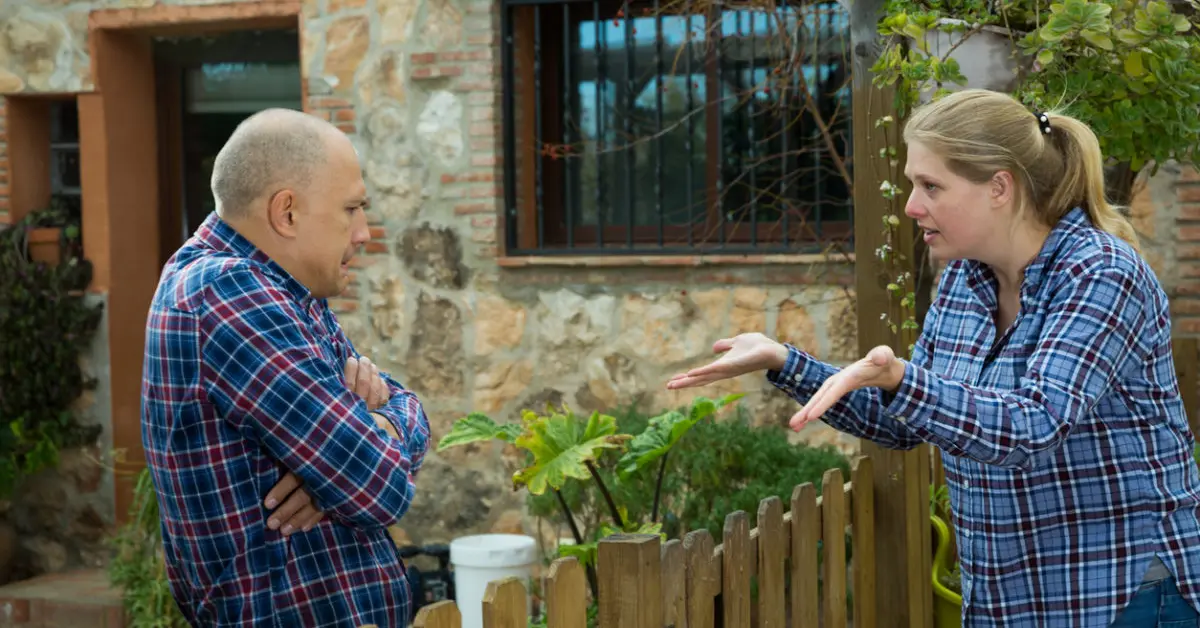
You handle a neighbor encroachment by starting with a calm conversation, backing it up with documentation, and escalating only if that does not work. A conservative approach almost always gets better results than going in aggressive.
Here is the sequence we recommend to clients, in order:
- Talk to your neighbor first. Approach them in a friendly, non-accusatory way. Most people who have encroached did not do it on purpose, and giving them the benefit of the doubt keeps the conversation productive instead of defensive. Before you knock on their door, have an idea of what remedy would satisfy you.
- Get a survey if you do not already have one. A licensed surveyor’s report gives you documented proof of exactly where the line falls, which matters if the conversation stalls or the matter ends up in front of an attorney. Splitting the cost with your neighbor is common, but it is worth paying for outright if they will not.
- Explore a resolution. Depending on what is encroaching, this might mean your neighbor removes the structure, you negotiate a formal easement letting it stay, or they purchase the strip of land outright. Any land transfer or easement needs to be documented and filed with the county to protect both of you later.
- Send a formal demand letter. If the conversation goes nowhere, a letter from an attorney carries more weight than another conversation and puts your neighbor on notice that you are serious.
- Be prepared to take legal action. If the steps above do not resolve it, the next step is litigation to force removal or resolve the boundary through the court.
For a broader look at how these situations tend to unfold, our guide to common types of neighbor disputes covers what to expect beyond boundary issues alone.
Do You Need a Survey Before Talking to Your Neighbor?
You do not strictly need a survey before the first conversation, but you should get one before you go any further than that. A survey turns “I think your fence is over the line” into documented fact.
Without a current survey, it can be genuinely hard to know where one yard ends and another begins, especially in older Central Texas neighborhoods where property markers have shifted or disappeared entirely. Most people do not check their survey before putting in a flower bed or a fence, which is exactly how these disputes start in the first place.
If your neighbor disputes your claim at all, a survey is not optional anymore. It becomes the evidence everything else depends on, whether you are negotiating an easement or eventually involving an attorney.
Can an Encroachment Turn Into Adverse Possession in Texas?
Yes, an encroachment can turn into adverse possession in Texas if it goes unaddressed for long enough. Under the Texas Civil Practice and Remedies Code Chapter 16, someone who peaceably and openly uses part of your land for 10 years without a title instrument may be able to claim legal ownership of it, and shorter three and five year periods can apply if the person has color of title to the property.
This is the piece most property owners never hear about until it is a problem. A neighbor’s fence sitting two feet over the line for a decade is not just an eyesore anymore. It can become the legal basis for a claim to that strip of land, and by the time you notice, you may have already lost the ability to act.
This is also why waiting rarely helps. The earlier you address an encroachment, whether through a conversation, a survey, or a demand letter, the more options you have. Once you are close to or past the statutory window, your case gets harder and your leverage gets weaker. For more on how these boundary issues escalate into formal disputes, see our overview of common causes of real estate litigation.
What Happens If Your Neighbor Won’t Cooperate?
If your neighbor will not cooperate, your options shift from informal resolution to formal legal remedies. This does not mean you are stuck, it means the process gets more structured.
At that point, an attorney can typically help in a few ways:
- Sending a formal demand letter that requests removal or a resolution within a set timeframe
- Negotiating an easement agreement if letting the encroachment remain works for both sides
- Filing a lawsuit to force removal, establish the correct boundary, or seek damages if the encroachment caused financial harm
Litigation is genuinely the last step, not the first, and most encroachment disputes never reach this stage. But knowing it is available, and that you have not run out of runway on the adverse possession clock, matters for how firmly you can negotiate along the way.
When Should You Call a Real Estate Attorney?
Call a real estate attorney when your neighbor refuses to acknowledge the encroachment, will not agree to a reasonable remedy, or when the encroachment involves a permanent structure rather than something minor like overgrown landscaping.
You should also involve an attorney earlier if you suspect the encroachment has been in place for several years, since that is exactly the situation where the adverse possession clock becomes relevant and timing starts to matter.
Jeff Kelly built his own development and construction background before becoming an attorney, which means he approaches boundary and encroachment disputes with a practical sense of what a resolution actually costs each side, not just the legal theory behind it. If you are facing a property line dispute with a neighbor, contact Kelly Legal Group to schedule a consultation and find out where you stand.
Bottom Line
Most property encroachments start as honest mistakes and get resolved through a calm conversation backed by a survey. Talk to your neighbor first, document the boundary, and only escalate to a demand letter or litigation if that does not work. The one thing you should not do is ignore it, because in Texas an unaddressed encroachment can eventually shift into a legal claim on your land.
Frequently Asked Questions
What is considered property encroachment?
Property encroachment is considered any structure, fence, tree, landscaping, or other physical object from a neighboring property that crosses onto your land without permission, whether it was intentional or accidental.
How much does it cost to resolve a property encroachment?
The cost to resolve a property encroachment depends heavily on how far it escalates. A survey typically runs a few hundred to a few thousand dollars, a demand letter from an attorney is a modest flat cost, and only a small share of disputes that reach full litigation carry significant expense. Most cases resolve at the survey or demand letter stage.
How long does it take to resolve an encroachment dispute?
How long it takes to resolve an encroachment dispute depends on your neighbor’s cooperation. An informal resolution can happen in days or weeks. A dispute that requires a demand letter or negotiation typically takes a few weeks to a few months, and litigation can extend the timeline to a year or more.
Can I remove an encroaching structure myself?
You should not remove an encroaching structure yourself, even if you are confident about the boundary. Self-help removal can expose you to liability for property damage and undermines your position if the dispute ends up in front of an attorney or a court.
What is the difference between encroachment and an easement?
The difference between encroachment and an easement is permission. An easement is a documented legal right to use part of a property, while an encroachment has no legal basis and is a form of trespass, even when it happens by accident.
Does homeowners insurance cover encroachment issues?
Homeowners insurance generally does not cover encroachment issues, since these are boundary and property rights disputes rather than physical damage claims. Some title insurance policies may address encroachment-related title defects, which is worth checking with your title company or attorney.
Can an encroachment affect my ability to sell my home?
An encroachment can affect your ability to sell your home because it may show up on a buyer’s survey or title search and create questions about clear title. Resolving it before you list, rather than during a pending sale, avoids delays at closing.