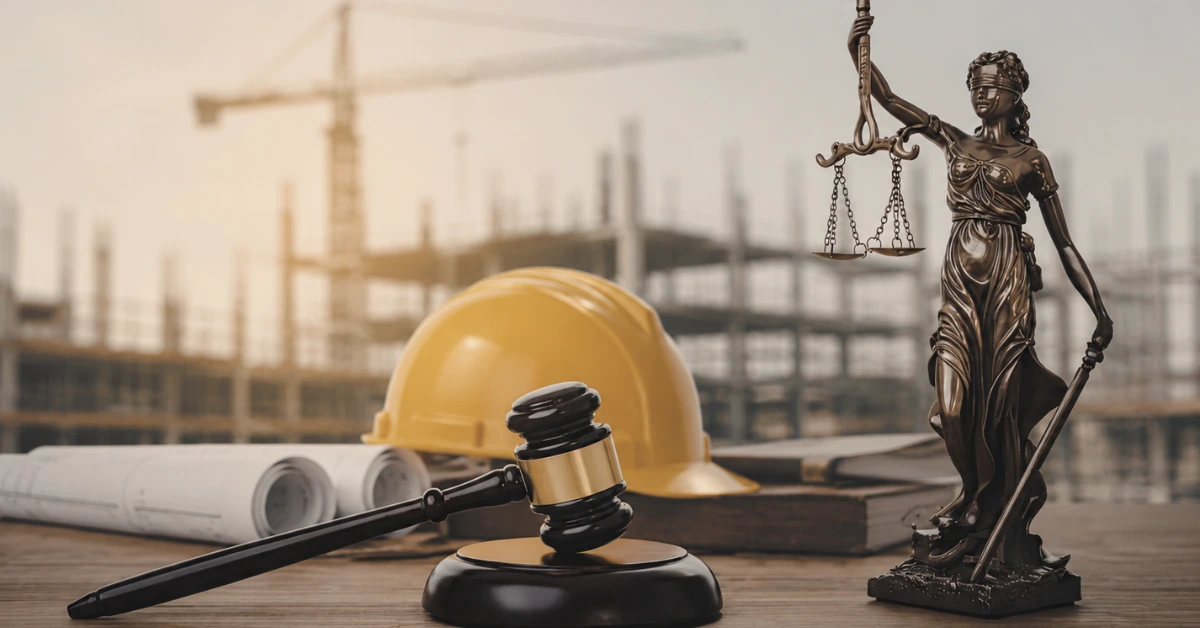
Construction litigation is the legal process of resolving disputes connected to a construction project through the court system. It typically arises from breach of contract, defective workmanship, payment disputes, or project delays, once negotiation or other resolution methods haven’t worked. Property owners, contractors, subcontractors, and design professionals are the parties most often involved.
But litigation is usually the last stop, not the first. Texas gives contractors and property owners other tools before anyone sets foot in a courtroom, including mechanic’s liens, mediation, and arbitration, each with its own strict deadlines and tradeoffs. Most construction disputes actually settle before trial, and knowing which path fits your situation early on can change your timeline and your legal bill significantly.
If you’re dealing with a stalled payment, a defect claim, or a project that’s gone sideways, Kelly Legal Group’s construction attorneys can help you sort out which path makes sense. Because founding attorney Jeff Kelly spent 15 years in construction and development, including managing his own multi-unit project from financing through completion, before becoming a lawyer, the firm approaches these disputes from both the legal side and the business side. That combination often means the difference between a contract dispute that gets resolved in weeks and one that drags on for a year.
What Is Construction Litigation?
Construction litigation refers to the formal legal process used to resolve conflicts that come up before, during, or after a construction project. These conflicts typically involve one or more of the following:
- Breach of contract
- Defective or substandard workmanship
- Project delays
- Nonpayment or payment disputes
- Disagreements over scope of work or change orders
When direct negotiation or informal resolution doesn’t work, the parties involved may take the matter to court to enforce their rights or recover money owed. That’s construction litigation.
It’s worth noting that construction litigation is a subset of construction law, not the whole field. Construction law also covers contract drafting, licensing, and regulatory compliance, none of which require a lawsuit. Litigation only enters the picture once a dispute has escalated past the point where those earlier tools can resolve it.
What Causes Construction Disputes in Texas
Most Texas construction disputes trace back to one of five recurring issues. Understanding which one applies to your situation is usually the first step toward figuring out what to do next.
Breach of Contract
A construction contract spells out who owes what, when work is due, and how payment works. When one party doesn’t hold up their end, whether that’s a contractor cutting corners on materials or an owner withholding payment without cause, it becomes a breach of contract claim.
Construction Defects
Defects are flaws in the finished work itself, such as a leaking roof, a cracked foundation, or faulty electrical wiring. Some defects show up immediately. Others don’t surface for years. In these cases, the central questions usually come down to whether the issue is a true defect or normal wear, who’s responsible for it, and what it will cost to fix.
Delays and Scheduling Issues
Weather, labor shortages, and permitting problems can all push a project past its deadline. When that happens, owners lose the use of their property and contractors may face liquidated damages, so figuring out who’s actually responsible for the delay becomes the central fight.
Payment Disputes
Cash flow keeps a construction project moving. When payments stall, subcontractors may walk off the job and the whole project can grind to a halt. Texas law gives contractors and suppliers specific tools, like mechanic’s liens and bond claims, to help secure payment when this happens.
Change Orders and Scope Disputes
Projects rarely go exactly as planned. Change orders are meant to formally document changes to the scope of work, but disputes often arise when a contractor believes they’re doing extra work without extra pay, or an owner believes they’re being overcharged for changes they didn’t approve.
| Type of Dispute | Common Cause | Potential Impact |
|---|---|---|
| Breach of Contract | Failure to meet contract terms, payment withholding | Legal action, delays, financial loss |
| Construction Defects | Poor workmanship, defective materials | Safety issues, costly repairs, claims |
| Delays | Weather, labor shortages, permitting | Financial penalties, strained relationships |
| Payment Disputes | Nonpayment, underpayment | Work stoppage, liens, litigation |
| Scope/Change Orders | Unclear changes, disagreement on extra work | Budget overruns, disputes |
Who Is Involved in Construction Litigation
Construction disputes usually involve several parties with competing interests, which is part of what makes them complicated to sort out.
- Property owners, who are typically funding the project and expect quality work delivered on time and on budget
- General contractors and subcontractors, who are managing the actual construction while trying to protect their margins
- Architects and engineers, who may be pulled in to determine fault when something goes wrong
- Suppliers and material vendors, who may file claims over unpaid invoices
When a dispute escalates, it’s common for more than two of these parties to end up involved in the same case, especially on larger commercial projects.
Is Construction Law the Same as Construction Litigation
No, construction law and construction litigation are not the same thing. Construction law is the broader legal field, covering contract drafting, regulatory compliance, licensing, and dispute resolution across the entire construction industry. Litigation is one piece of that field, specifically the process of resolving a dispute through the court system.
Not every construction legal issue ends up in litigation. Many are resolved through negotiation, mediation, or arbitration long before a lawsuit is ever filed. A construction litigator typically handles both sides of this, drafting and reviewing contracts on the front end to prevent disputes, and stepping into litigation if one develops anyway.
How Does the Construction Litigation Process Work
Construction litigation follows a fairly predictable sequence, though the length and complexity of each stage depends on the case.
- Demand letter. Most disputes start with a formal letter from an attorney outlining the claim and requesting resolution.
- Filing the lawsuit. If the demand letter doesn’t resolve the issue, the next step is filing a formal complaint in court.
- Discovery. Both sides exchange documents, take depositions, and gather evidence to build their case.
- Pretrial motions. Either side may file motions to narrow the issues, exclude certain evidence, or ask the court to rule without a full trial.
- Trial. If the case doesn’t settle, it proceeds to trial before a judge or jury.
- Appeal. The losing party may appeal if they believe the court made a legal error, though an appeal is not a chance to retry the facts of the case.
Most construction cases settle somewhere along this path rather than reaching a full trial.
Do You Have to Go to Court
No, going to court is not the only way to resolve a construction dispute. Texas construction contracts frequently include, or allow for, alternative dispute resolution methods that can be faster and less expensive than a full lawsuit.
Mediation
Mediation brings both sides together with a neutral third party who helps facilitate a resolution. The mediator can’t force a settlement, but the process is voluntary and gives both parties more control over the outcome than a courtroom does.
Arbitration
Arbitration functions like a private court. A neutral arbitrator hears both sides and issues a binding decision. It’s typically faster and less formal than litigation, though arbitration decisions are difficult to appeal, which makes preparation especially important.
Negotiation
Sometimes the fastest resolution is a direct conversation between the parties, or their attorneys, aimed at finding common ground before anything is filed.
Alternative dispute resolution isn’t right for every case. Complex, high-value, or highly contentious disputes may still require full litigation. But for many construction conflicts, these paths offer real advantages:
- Faster resolution than court
- Lower legal costs
- More flexibility in crafting a solution
- Privacy, since proceedings usually aren’t public record
- A better chance of preserving the working relationship between the parties
What Can You Recover in a Construction Lawsuit
A party who prevails in construction litigation may be able to recover several types of costs, though recovery isn’t automatic and typically requires a contractual or statutory basis.
- Damages, covering the actual financial harm, such as repair costs or lost profits from a delay
- Attorney’s fees, when the contract or Texas statute allows for fee-shifting
- Expert witness fees, often necessary in defect and delay cases to establish cause and cost
- Court costs, including filing and service fees
In Texas, contractors and suppliers also have access to mechanic’s liens and bond claims, which are legal tools that attach to the property or a payment bond to help secure payment. These remedies come with strict filing deadlines, so timing matters as much as the underlying claim.
How a Central Texas Construction Attorney Can Help
A construction attorney’s role typically spans both prevention and resolution. Before a dispute happens, that means reviewing and negotiating contracts to reduce the odds of a conflict in the first place. Once a dispute exists, it means building the case, negotiating a settlement, or taking the matter to trial if that’s what protects your interests.
Kelly Legal Group’s Austin construction attorneys bring a practical, business-first approach to these disputes. Because Jeff Kelly managed his own development project and served as a CFO before practicing law, the firm evaluates disputes with an eye toward what actually makes financial sense, not just what’s technically winnable. That perspective, combined with direct experience in Travis County and Central Texas courts, means clients get strategy grounded in both the law and the numbers.
Whether you’re a property owner facing a defect claim or a contractor chasing an unpaid invoice tied to a breach of contract, having an attorney who understands the construction industry from the inside can change how quickly and how favorably a dispute gets resolved.
Bottom Line
Construction litigation is the court process for resolving construction disputes, usually tied to breach of contract, defective work, delays, or nonpayment. It’s typically a last resort after negotiation, mediation, or arbitration haven’t worked. Understanding your options early, and acting before deadlines like lien filing windows pass, gives you the best chance at a fast, favorable outcome.
If you’re facing a construction dispute in Austin or Central Texas, contact Kelly Legal Group for a free consultation. We’ll walk through your options clearly, without the legal jargon.
Frequently Asked Questions About Construction Litigation
What is construction litigation?
Construction litigation is the formal legal process of resolving disputes connected to a construction project through the court system. It typically involves issues like breach of contract, defective workmanship, project delays, or nonpayment, and comes into play once other resolution methods have failed.
What is the difference between arbitration and litigation in construction?
The difference between arbitration and litigation in construction comes down to where and how the dispute is resolved. Litigation happens in public court under formal legal procedures, which tends to be slower and more expensive. Arbitration is handled privately by a neutral arbitrator and is typically faster, though it offers fewer options for appeal.
Is construction law the same as litigation?
Construction law is not the same as litigation. Construction law is the broader legal field covering contracts, compliance, and dispute resolution in the construction industry. Litigation is just one part of that field, specifically the process of resolving a dispute in court.
What are the most common causes of construction disputes?
The most common causes of construction disputes are breach of contract, construction defects, and project delays. Breach of contract happens when one party doesn’t meet its obligations. Defects involve flaws in materials or workmanship. Delays push a project past its agreed timeline and often lead to financial disputes over who’s responsible.
Do most construction disputes end up in court?
Most construction disputes do not end up in a full trial. Many are resolved through negotiation, mediation, or arbitration before litigation becomes necessary, and even cases that are filed in court often settle before reaching trial.
How long does construction litigation take in Texas?
How long construction litigation takes in Texas depends on the complexity of the case, but it typically ranges from several months for straightforward disputes to a year or more for cases that involve multiple parties, expert testimony, or a full trial.
Can I recover attorney's fees in a construction lawsuit?
You may be able to recover attorney’s fees in a construction lawsuit, but it isn’t automatic. Recovery generally requires a specific basis in the contract or Texas statute, and the court has discretion over what fees are considered reasonable.